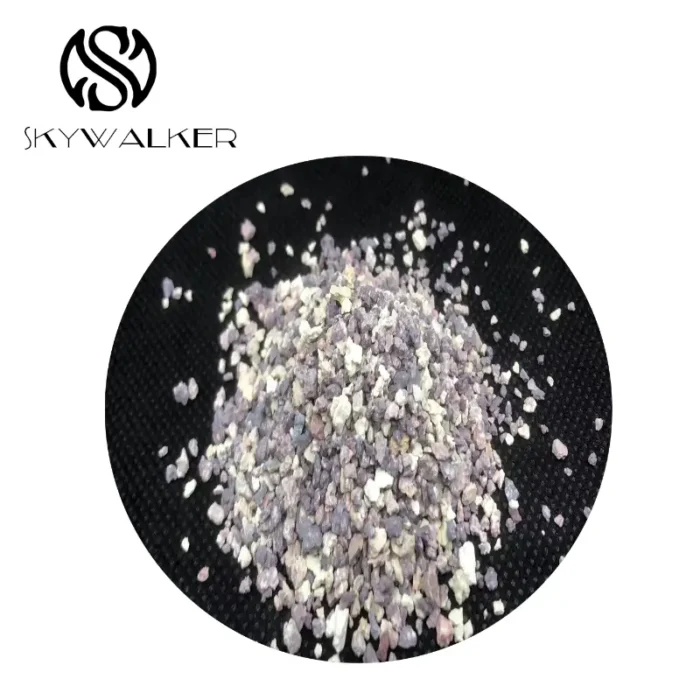
Fathoming activated detoxifying mineral obligates a deep study of its attributes. This noteworthy element is widely deployed in the processing of vegetable oils, adeptly eliminating pollutants. The modification method typically involves physical treatment, amplifying its adsorptive potential to seize colored dyes. Finally, this overview will delve into the basics behind oil decolorizing clay activated bleaching earth and its applications.
Purifying Aggregate Companies: Finding the Appropriate Source
Attaining a solid company of activated clay is vital for many markets, particularly those involved in edible oil processing. Picking the suitable source requires comprehensive consideration beyond just valuation. Appraise their credentials in raw material provision, their verification procedures, and their competence to consistently match your order needs. A credible bleaching earth distributor will also offer information and a collection of categories to match your individual application.
Distinct Basis Behind Improved Detoxifying Mineral
Modified bleaching aggregate, a cornerstone among the refining operation for edible oils, functions through a fascinating amalgamation of concrete and chemical relations. Initially, naturally occurring chlorite is activated – a approach involving heat and reagents – to drastically increase its surface expanse. This expanded surface offers an immense number of areas for the specific adsorption of color pigments, contaminants, and undesirable odor compounds. The mechanism is primarily physisorption, where molecules are held by weak van der Waals associations, though some interactional adsorption can also manifest with certain agents. This results with a significant reduction of color and advancement of the oil's condition and bouquet.
Purifying Mineral - Specifications and Purposes
Purifying material, frequently referred soft white clay, demonstrates unique features that make it considerably advantageous across various assortment of businesses. Its chief attribute is its notable radiance, coming from its decreased trace element concentration. This characteristic causes it appropriate for applications expecting a radiant view. Besides its hue, decolorizing mineral is frequently fine and shows good flexibility, allowing it to be effortlessly shaped. Frequent utilizations cover textile production, polymer improvement, health blends, beauty materials, and as an absorbent compound in countless manufacturing procedures. As well, it finds function in clayware and stain fields.
Determining the Appropriate Processed Purifying Aggregate for Your Applications
Opting for the matching purifying compound can be a sophisticated procedure, as diverse applications need individual properties. Consider the kind of substance you’re working with; some elements are better for plant oils, while alternative types are adapted towards creature fats. Factors like surface area and clarification strength profoundly influence performance.
- Assess the hue and smell degree of the substance to identify the desired lightening proportion.
- Study the variation; diminutive particles generally produce amplified surface area, but may provoke removal challenges.
- Interpret the moisture content as it conditions the clay’s adsorptive power.
Detoxifying Mineral: Development Processes and Supervision
The generation of bleaching earth, a widely utilized element for oil refining and chemical purification, involves several key movements. Initially, illite is harvested and then subjected to preparation via heat contact and/or chemical modification. This practice enhances the capturing properties of the compound. Later, rigorous quality tests are implemented, covering assessments of particle size orientation, crude adsorption capability, and moisture ratio. Cutting-edge analytical methods, such as spectroscopy analysis and formal analysis, are employed to assure a dependable entity that complies with stringent benchmarks.
Low-impact Sourcing of Enhanced Bleaching Material
The ascending demand for activated bleaching earth presents a key challenge regarding its harvesting and environmental ramification. Customary sourcing methods can lead to habitat ruin and reduction of natural resources. Consequently, a reorientation towards sustainable sourcing is imperative. This involves prioritizing practices like greening of mined areas, leveraging waste remnants from other industries for manufacture, and assisting indigenous communities to support ethical and conscientious mining functions. Furthermore, validation schemes and detailed assessment processes are crucial to verify that the compound is obtained in a truly green manner. Matters should also include lowering heat consumption during processing and moisture usage.
- Land rehabilitation efforts
- Employing waste materials
- Cooperating with local communities
- Certification schemes
Purifying Aggregate Supplier Guide: Principal Companies Listed
Selecting a reputable adsorbent manufacturer can be a issue, but our comprehensive compilation aims to ease the process. We’ve meticulously aggregated data and sorted leading businesses in the bleaching earth field. This summary highlights leading producers known for their quality and support, allowing clients to seek out the prime source for their tailored needs. Several factors, including production level, lineup, and appraisals, were weighed in determining these top placements.
Grasping Activated Bleaching Earth Performance Metrics
To efficiently analyze the grade of activated bleaching earth, it’s paramount to know key effectiveness metrics. These markers often include color number, typically measured using a spectrophotometer, which represents the earth’s ability to eliminate color from oils. Also, acid content is vital, as it affects the bleaching process; a higher quantity usually connects with improved clarification capabilities. Finally, binding area, often calculated via BET analysis, strongly impacts the earth’s capacity to hold colorants, ultimately governing its overall purifying function.