Opting for a hoisting apparatus, the selection often concerns jointed crane versus direct arm. Telescopic booms grant user-friendliness and are perfect for erect lifts, but articulated arms grant improved maneuverability, allowing access to tight spaces. Contemplate the task environment; if you’re mainly facing blockades or call for more sophisticated positioning, a pivoting lift is commonly the prime option. However, for open areas and straightforward lifts, a fixed arm might result in a more budget-friendly alternative.
Appreciating Resilient Craning Arm Cranes: Uses and Gains
Robust lifting arm lifters represent a exclusive type of uphoisting equipment, constructed for hefty load handling in demanding environments. Their main feature is a sturdy jib design, which enables for accurate positioning and enhanced balance, especially when working in restricted spaces or at substantial heights. Common applications include bridge formation, assembly initiatives, breeze plantation fitting, and structural advancement. The crucial advantages entail increased welfare, boosted effectiveness, and the capability to achieve tasks that could be impossible with customary apparatus. This leads to decreased expenses and refined plan consequences.
STS Cranes: The Champions of Harbor Container Movement
These titanic STS lifters represent the height of engineering achievement in the marine industry. Designed to effectively load and transfer containers between freighters and the pier, they are crucial for the smooth operation of modern marinas. Their altitude – often exceeding one hundred vertical feet – and unbelievable lifting power allow them to handle the most immense container crafts currently in service, fundamentally directing global business.
Knuckle Boom Cranes: Versatility in Loading Activities
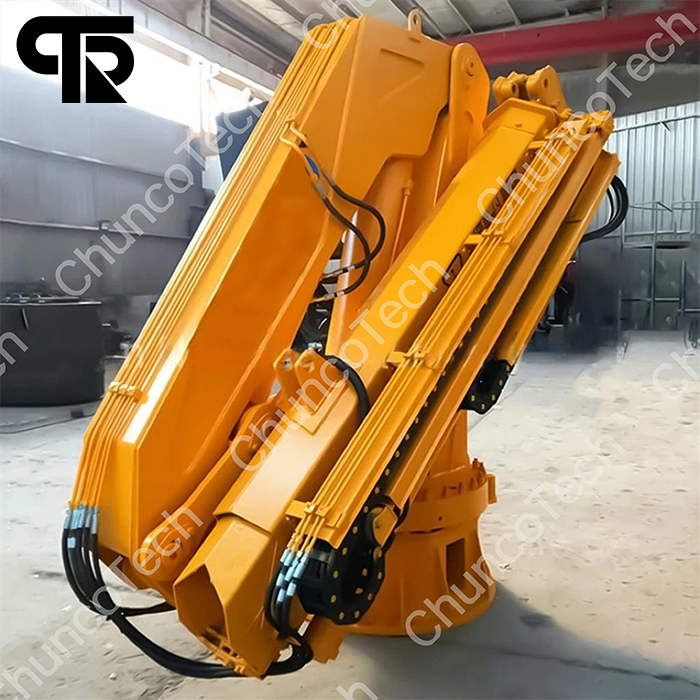
Folding devices are esteemed for their exceptional variability, providing operators with a particular advantage in varied transporting activities. Containing a folding boom part, these powerful loaders can extend around hindrances and place items in confined regions. This capability makes them advantageous for applications in erection, management, energy duties, and numerous other domains. Conclusively, knuckle boom hoists offer a essential answer to intricate carrying demands.
Straight Boom Cranes: Fineness and Stability Clarified
Unwavering boom hoists are distinguished for their remarkable capability to deliver spot-on lifting and placement of objects. Compared with pivoting models, their straightforward design creates congenital reliability, making them suited for purposes requiring extensive scales of command and restricted vacillation. This hallmark is particularly critical in erection sites and domains where tight tolerances are vital.
Stiff Lifting System Advantages: Once Resilience Is Necessary
Established boom equipment often face challenges with deflection, especially when carrying massive freight or working at major lengths. Nonetheless, solid jib arm apparatus produce a substantial plus by lowering unnecessary jarring. This amplified equilibrium manifests to secure executions, boosted meticulousness, and a diminished danger of burden imbalance. Thus, firm devices are suited for tasks where mechanical integrity is paramount.
Wharf Cranes: Specific Deep Dive into STS Setup
Specific jetty elevator solution represents the critical component related to modern material depots. Modern STS lifting systems are state-of-the-art frameworks built to efficiently relocate loads by massive freight liners at shore-based carrying. Its own function necessitates correctness construction and built-in operations to maintain guarding and enhance efficiency.
Examining Lifting Types: Segmented, Boom, Tough, and Dockside
Selecting the proper machine for a targeted purpose is crucial. While many variants exist, four frequently used versions – folding cranes, fixed cranes, rigid cranes, and pier cranes – exemplify significantly different traits. Knuckle cranes deliver exceptional maneuverability due to their articulated boom, making them fit for compressed zones. Direct cranes offer elastic extension through their movable arm, optimal for common loading expectations. Luffing cranes sustain a vertical segment, commendable for accurate arrangements where constancy is critical. Finally, Harbor cranes, custom made for box carrying at jettys, include substantial elevating power and prolonged coverage.
- Knuckle Hoisting Forms
- Fixed Crane Kinds
- Heavy-Duty Machine Classes
- Ship-to-Shore Lifter Categories
Distinct Evolution Concerning STS Cranes: Shifts and Progress
Through recent decades, STS (Ship-to-Shore) crane design has undergone a major development, stimulated by expectations for increased port productivity. Early STS cranes were somewhat simple constructions, applying basic performing mechanisms. Now, latest STS cranes utilize sophisticated automation, including advanced control systems, intelligent positioning abilities, and improved safety standards. A key pattern is the incorporation of powered by batteries propulsion, curbing discharges and elevating operational reliability. Also, the rise of remote operation and automated maintenance are evolving the area associated with STS crane use. The expectation sees sustained priority on fuel management and the design of even taller cranes to accommodate constantly bigger container boats.
 Hopper Loader